Riding on the road
AllowedAll three classes can ride on roads and in bike lanes with the same rights and duties as bicycles.
Classes, age limits, helmets and exactly where you can ride, checked against Colorado's official sources.
Class 1 and 2 may use bike and pedestrian paths where bikes are allowed unless a local government bans them. Class 3 is off paths unless the path is inside a street or locally allowed. Trail access is set by each city, county or land manager.
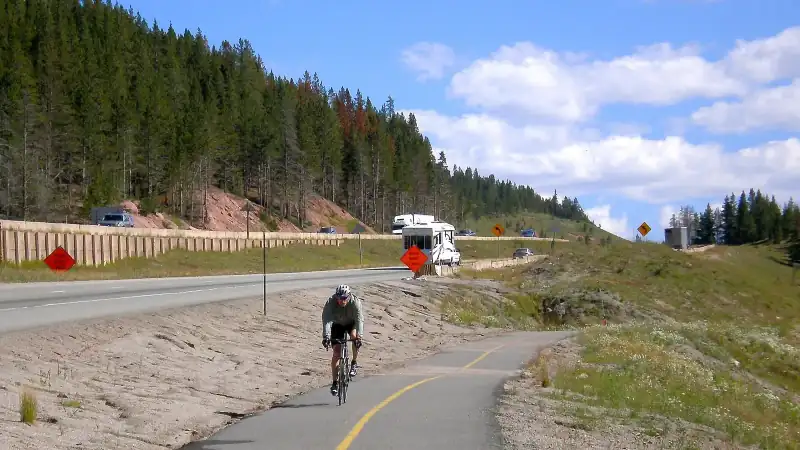
Photo: Ericshawwhite, CC BY-SA 3.0
Colorado uses the three-class system and treats e-bikes like bicycles, with no license, registration or insurance needed. You must be 16 to ride a Class 3, and riders under 18 must wear a helmet on one. Local governments control where e-bikes go on paths and trails, so rules differ a lot between Denver, Boulder and mountain towns.
Colorado E-Bike Tax Credit.
All three classes can ride on roads and in bike lanes with the same rights and duties as bicycles.
Sidewalk riding is set locally. Boulder, for example, allows Class 1 and 2 on sidewalks outside dismount zones but keeps Class 3 on streets and bike lanes. Denver restricts sidewalk riding in many areas. Check your city before riding on sidewalks.
Class 1 and 2 e-bikes may ride on bike and pedestrian paths where bicycles are allowed, unless a local government prohibits them. Class 3 e-bikes are not allowed on a bike or pedestrian path unless it's within a street or highway, or the local jurisdiction permits it.
Colorado gives cities, counties and land managers control over trails. Some open space agencies allow Class 1 on certain trails, while others ban all e-bikes. Boulder County, for example, keeps Class 3 off its multi-use paths and open space trails except the US 36 bikeway. Federal land follows its own rules.
No one under 16 may ride a Class 3 e-bike, except as a passenger. Riders under 18 must wear a bicycle helmet on a Class 3. There's no state minimum age for Class 1 or 2.
Class 2 e-bikes with throttles up to 20 mph are legal and treated like Class 1 in most state rules, but some local trail managers allow only Class 1.
Class 3 bikes assist to 28 mph and must have a speedometer. Riders must be 16 or older, and under-18 riders must wear a helmet. Expect Class 3 to be kept off most paths and trails.
Don't ride impaired. Colorado's impaired-driving laws can apply to people riding bicycles and e-bikes on public roads.
Chosen for Colorado's riding conditions (hills, snow, long commutes) and its legal classes. Every pick is a Class 1, 2 or 3 e-bike, so it's street legal here when ridden as sold.
We may earn a commission when you buy through our links, at no extra cost to you. How we make money
Up to 85 miles of claimed range and fat tires for snow, sand and gravel.
80 Nm of torque for climbs and up to 75 miles of claimed range.
Sold through dealers; ask a participating Colorado tax credit retailer
100 Nm of torque for climbs and switchable class to match local path rules.
Sold through dealers; ask a participating Colorado tax credit retailer
90 Nm of torque for climbs and fat tires for snow, sand and gravel.
Sold through dealers; ask a participating Colorado tax credit retailer
E-bike theft is common in Colorado's cities, and most homeowners and renters policies cap bike payouts or exclude motorized bikes. Dedicated e-bike insurance covers theft, crash damage and liability, often for less than a coffee a week.
Cities can add their own rules for sidewalks, parks and paths. Here's what's different in Colorado's biggest e-bike cities.
One short email when a Colorado law changes or a rebate opens. That's it.
No spam. Unsubscribe anytime. See our privacy policy.
Last verified November 25, 2026. Every fact on this page is checked against the official sources below. How we verify